
How the refund pipeline actually runs
Every refund moves through the same four gates: the return is accepted (an acknowledgment that it was received intact, not that it is finished), processed (the IRS checks the math and matches your documents to what employers and banks reported), approved (the refund amount is locked and scheduled), and sent (the money leaves the Treasury). The gates run in weekly batch cycles, not continuous streams — which is why refund timing behaves in whole-week jumps rather than days. E-filed returns with direct deposit typically complete the full circuit in about three weeks; the same journey by paper takes six weeks or more, because every gate re-processes physical documents by hand.
The standard timeline everyone plans around
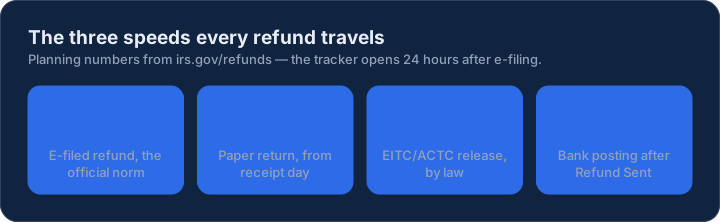
Three official numbers carry almost all the planning weight. The tracker becomes available 24 hours after e-filing a current-year return (about four weeks for paper). E-filed refunds typically arrive about three weeks from acceptance — many land sooner, some run longer when review flags trip. Paper refunds take six weeks or more from the date the IRS receives the return. Direct deposit shaves extra days off the end for everyone: once the status shows Refund Sent, deposits typically post within about five business days, while paper checks ride the mail on top of everything else. The where is my refund guide walks each status panel in detail.
The 2026 calendar, and the season ahead
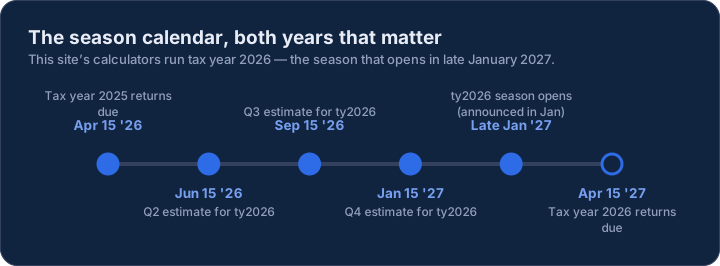
The calendar below lines up the dates that matter on both sides of the season: the tax year 2025 deadlines that just closed, the quarterly payment dates running through early 2027, and the tax year 2026 season — the one this site’s calculators are built for — which opens in late January 2027. The IRS announces each season’s official opening day in early January; recent seasons have consistently opened the last week of January (the tax year 2024 season opened January 27, 2025). Filing day one of the season is the practical starting gun for refund timing: returns accepted that week face the full queue, returns accepted in February run through a shorter one.
The mid-February rule for EITC and ACTC families
By law, the IRS cannot issue refunds before mid-February for returns claiming the Earned Income Tax Credit or the Additional Child Tax Credit — even those filed the day the season opens. The hold is anti-fraud infrastructure, not a processing backlog, and it releases all affected refunds together once the law allows. Practical upshot for affected families: acceptance in late January, a tracker that sits on Return Received through mid-February, and deposits typically landing in the last days of February. Planning around the release — rather than refreshing the tracker in a fury through the hold — is the single biggest sanity-saver of the season for these households.
Making your own refund arrive faster
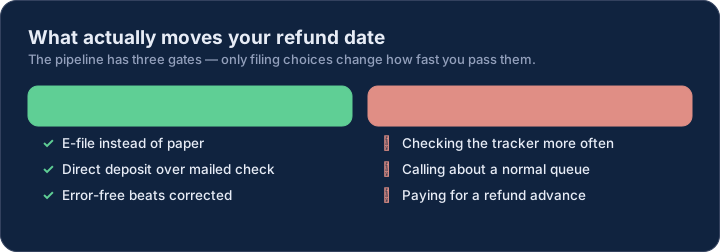
The timing levers are few but decisive. File electronically — paper costs at least three extra weeks at every gate. Choose direct deposit and verify the account and routing numbers character by character: a wrong digit routes your refund into limbo that only a paper-trace can recover. File early but not sloppy — an error-free return accepted February 1 beats a corrected return accepted January 20, because corrections restart the review clock. And skip the "refund advance" temptation if you can wait the three weeks: the honest mechanics of those products are on the refund advance page. For a year-round fix, the W-4 withholding calculator moves that money into your paychecks all year instead of holding it for spring.
Estimates for planning only — not tax, legal or accounting advice. Your actual return depends on facts this tool does not ask about. Figures are based on IRS Revenue Procedure 2025-32 (tax year 2026), verified October 2026.